
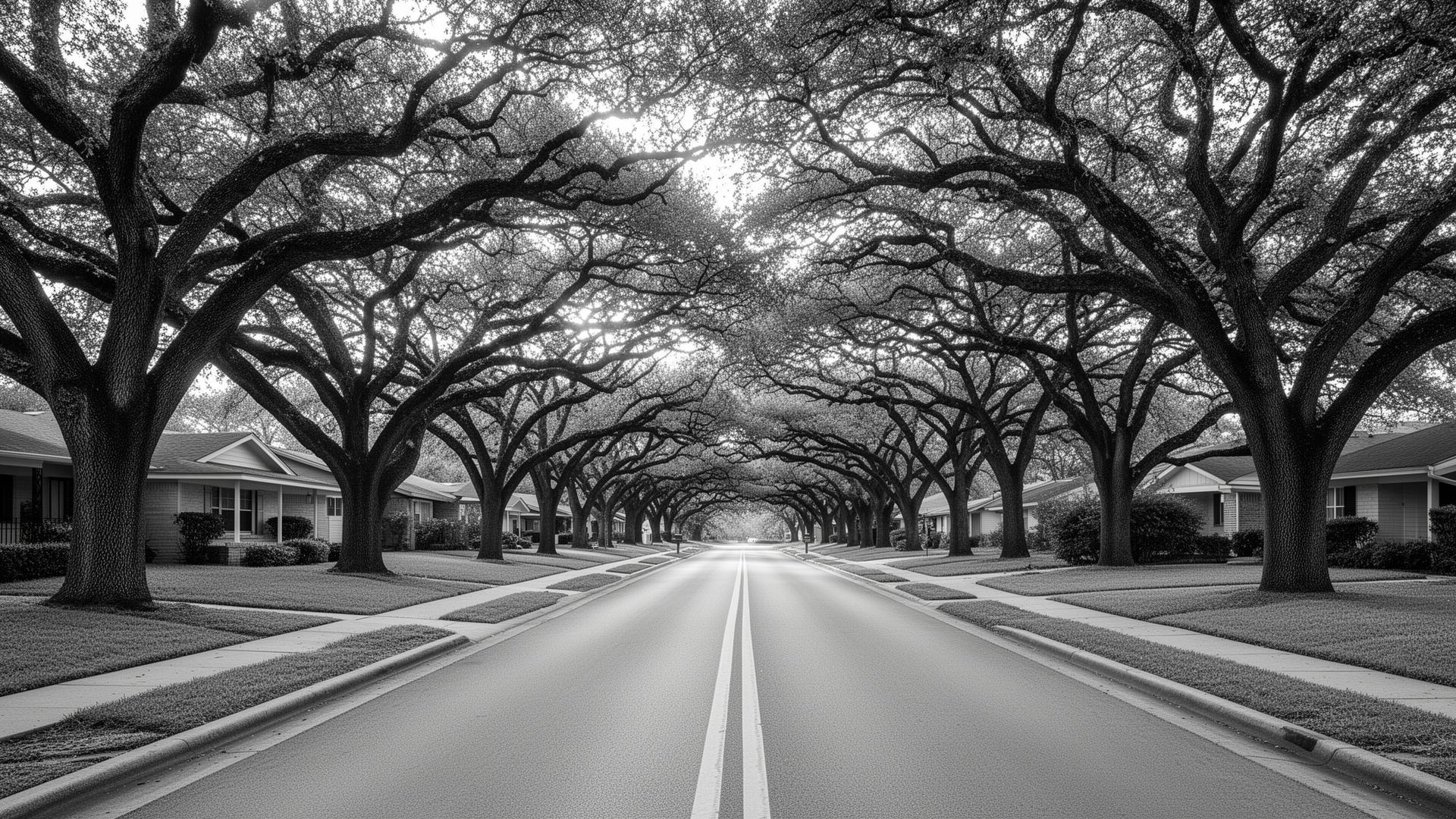
A vision ahead of its time: 1972 and the concept of planned growth
In 1972, Travis Country was established as Austin's first environmentally planned neighborhood. At a moment when suburban development across America meant clear-cutting natural areas and gridding out identical lots, someone envisioned something different: homes in the Texas Hill Country integrated with the land rather than imposed upon it. Development began in earnest in 1974.
The Edwards Aquifer runs beneath Travis Country's soil, and the presence of the Barton Creek watershed shaped every early decision about how the neighborhood would grow. Rather than drain and develop, the founders chose to work with the topography. This philosophy would prove to be the neighborhood's defining identity.
The first neighborhoods: Trailwood Village and the 1970s build-out
The initial wave of homes established Trailwood Village starting in 1975, with 438 homes constructed during the mid and late 1970s. These homes set the character of early Travis Country: generous wooded lots, mature native vegetation, a quiet streetscape designed for long-term habitation rather than quick turnover. The builders and planners understood that trees take time. They were planting for decades ahead.
By the late 1970s, families moving into these homes chose them precisely because of what was not there: no strip malls on every corner, no apartment complexes, no sense of impermanence. The greenbelt to the east was still a series of private and protected wild lands. But it was there, preserved.
The greenbelt becomes a battleground: 1990
For nearly two decades, Travis Country grew quietly. But in the late 1980s, a new threat emerged. In 1990, a major development company proposed the Freeport-McMoRan Barton Creek Planned Unit Development, a massive project that would have brought 2,500 homes, 1,900 apartments, and extensive commercial development across thousands of acres of the creek corridor.
On June 7, 1990, the Austin City Council held a hearing that lasted until after 5 a.m. The opponents of development, many of them residents from neighborhoods like Travis Country, overwhelmingly voiced their objection. The council voted unanimously to disapprove the development. The greenbelt would not become a subdivision.
In 1992, Austin voters passed a bond measure with more than 65 percent approval to purchase land in the Barton Creek watershed for permanent public conservation. Between 1992 and 1999, the Trust for Public Land acquired approximately 1,000 acres and transferred them to the city. The Barton Creek Greenbelt as we know it today was born from this effort.
Expansion and maturation: the 1990s and 2000s
As the greenbelt protection effort took hold, Travis Country continued to expand inward. Village Park at Travis Country emerged in the mid-1990s, with construction running 1996 to 1999. These homes commanded higher prices and featured larger footprints, larger yards, and more sophisticated landscaping. Around 1998, Travis Country Green added another phase, with 130 homes oriented to preserve even more of the neighborhood's native canopy. By the early 2000s, Travis Country had grown to approximately 1,500 homes.
The role of the community association
The Travis Country Community Service Association, established in 1973, became the guardians of the neighborhood's character. The association maintained the Wildflower Preserve, managed amenities, and enforced architectural guidelines designed to preserve the neighborhood's environmental values. As Austin boomed around Travis Country, the pressure to build bigger, pave wider, and commercialize intensified. The association held the line.
The maturation of an idea
By the 2000s and 2010s, what had been a vision on paper in 1972 had become lived reality. The oak trees planted in the 1970s had grown thick and tall. The Edwards Aquifer beneath the neighborhood remained clean and protected. Residents could walk from their homes into the greenbelt; the neighborhood and its natural surroundings had become one integrated landscape.
Why Travis Country endures
The through-line that still defines Travis Country is the understanding that a neighborhood is not merely a collection of houses. It is an agreement among residents and planners about what kind of place they want to inhabit and what they are willing to preserve to make that possible. From 1972 forward, Travis Country has asked residents to accept smaller lots, protected views, and limited commercial development in exchange for something less tangible but more durable: a neighborhood where you can walk among native plants, where trees have been growing since before your home was built, where the land itself is part of the experience of living there.
This is not a common choice in American suburban development. It never has been. But it is the choice that Austin's first environmentally planned neighborhood made, and it is the choice that it continues to make, five decades later.
